By Analyst Team · Updated 2026-07-17 · 10 min read
LIMITED TIME AVAILABILITY
Unlock Full ip-tv provider Access
Secure special promotional rates instantly before the window closes. Lock in your pricing model today before plans return to standard regional metrics.
1. Why Many People Regret Their ip-tv provider Choice
Every week, thousands of households search for a new connection to stream live television, movies, and sports. Yet a startling number of them end up frustrated within the first month. The problem isn't that IPTV is bad — it's that the wrong ip-tv provider leaves you with constant buffering, unreliable channels, or worse, a service that disappears overnight.
One common regret: signing up for the cheapest subscription without checking server infrastructure. A bargain price often means overloaded servers shared across thousands of users. You see the spinning wheel during the final minute of a game, or the stream drops entirely during a critical scene. Another frequent complaint involves channel lineups that don't deliver what was promised — missing local networks, broken EPG data, or channels that simply redirect to a blank screen.
Then there's the legal grey area. Some providers operate without proper licensing, and while enforcement varies by country, you risk losing your money and your connection if authorities shut them down. By the time you realize the mistake, you've wasted both cash and the convenience you were seeking.
The good news? These regrets are entirely avoidable if you know what to prioritize before you hand over your payment details. This guide walks you through every essential check so you can confidently select an ip-tv provider that actually works.
2. Criteria That Should Drive Your Decision
Server Reliability and CDN Infrastructure
Your streaming experience lives or dies on the backbone of the provider's server network. A reputable ip-tv provider invests in a content delivery network (CDN) with multiple nodes across continents. This means the data travels a shorter distance to your device, reducing latency and buffering.
Look for providers that specify their server locations. If they offer European, North American, and Asian nodes, you're looking at a serious operation. Also check whether they maintain dedicated servers for live sports events, which typically require more bandwidth than on-demand content. Providers that openly display uptime statistics — ideally 99.5% or higher — are more likely to deliver consistent performance.
Channel Selection and Content Licensing
Not all channel lineups are created equal. A premium ip-tv provider should offer at least 10,000 live channels covering major categories: news, entertainment, documentaries, kids programming, and most importantly, sports. Pay attention to whether they include regional variants — for example, BBC One London versus BBC One Scotland, or local affiliate stations in major US markets.
Content licensing matters because it directly affects reliability. Providers that source content through legitimate aggregation licenses tend to have more stable feeds and fewer interruptions. While the IPTV industry overall operates in a complex regulatory space, providers that are transparent about their sourcing generally maintain better relationships with content distributors, resulting in fewer blackouts and clearer signals.
Device Compatibility and App Quality
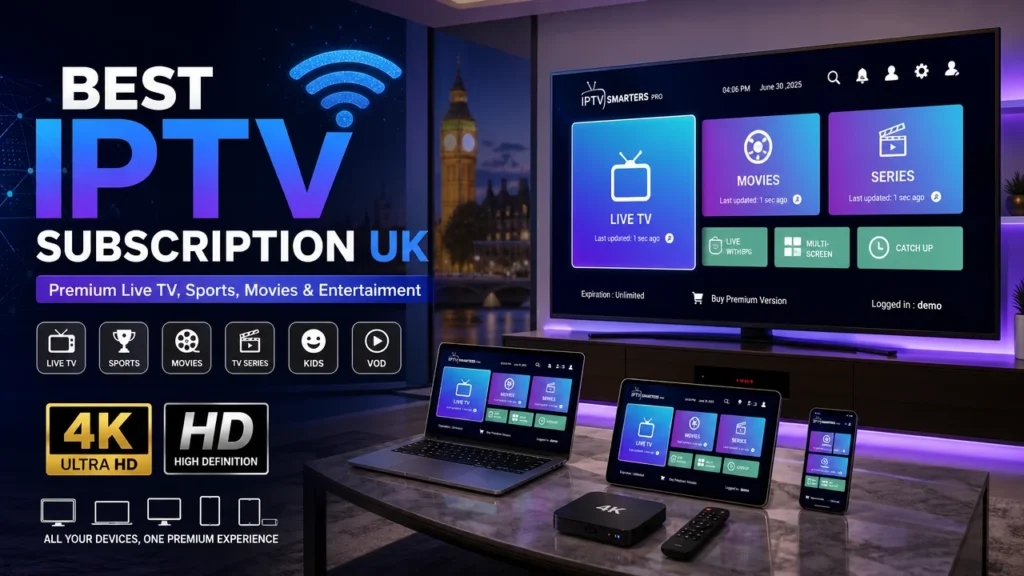
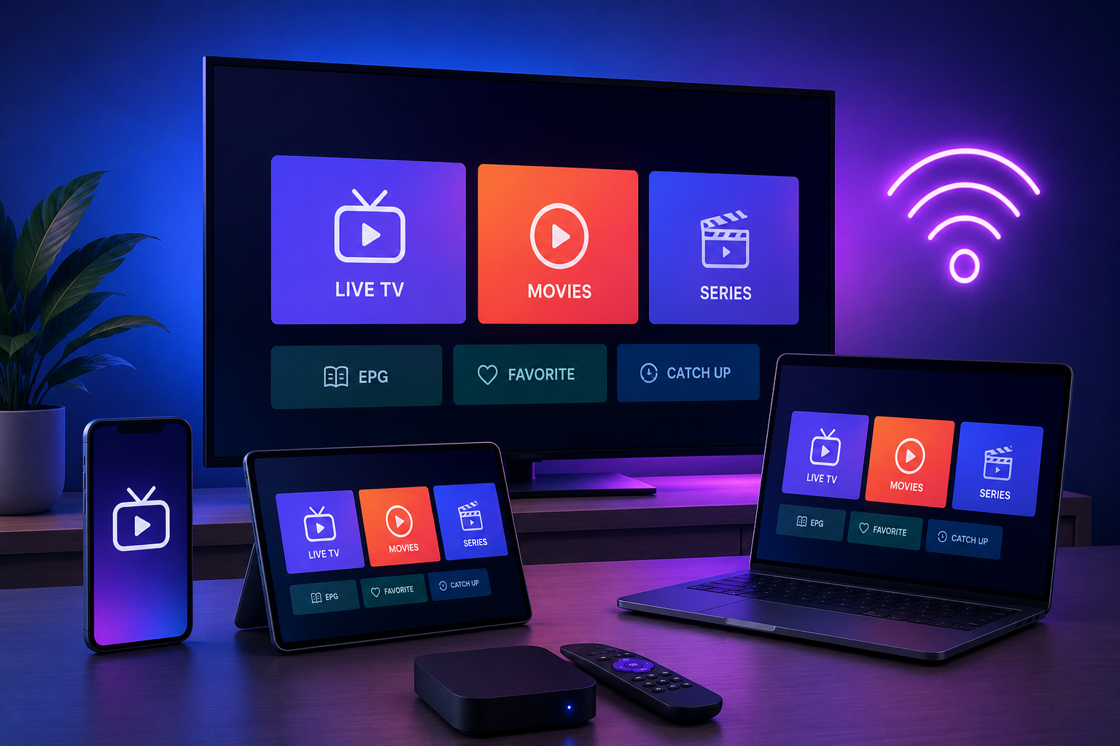
The best ip-tv provider in the world means nothing if it doesn't run smoothly on your preferred hardware. Most quality providers support Smart TVs (Samsung Tizen, LG webOS), Android TV boxes, Fire TV Stick, Apple TV, MAG boxes, smartphones, and tablets. But compatibility varies — some providers have polished native apps with intuitive electronic program guides (EPG), while others rely on third-party players like TiviMate or IPTV Smarters.
Test the user interface. Can you quickly browse by category? Does the search function find channels by name? Is the EPG properly populated with accurate program descriptions? A well-designed interface transforms your viewing experience from frustrating to fluid. Never commit to a provider without first confirming their app works on your exact device model.
Unlock complete high-definition entertainment and priority streaming access packs designed for every household.
Claim This Special Offer for ip-tv provider →3. What You Need to Know About the Current Market
The IPTV landscape has transformed dramatically in the past 18 months. In 2026, the market is bifurcated between established, large-scale operations and dozens of smaller resellers who package the same streams under different brand names. This fragmentation means you can pay widely different prices for essentially the same service.
Industry consolidation is accelerating. Several major ip-tv provider operations have merged server networks, leading to improved reliability for their combined user bases. Meanwhile, new entrants flood the market monthly, often offering unsustainable prices that collapse after a few months when operating costs catch up. The sweet spot for pricing sits between $10 and $20 per month for a premium package with 4K capability, extensive VOD libraries, and reliable EPG data.
Technology advancements have also changed expectations. The best providers now offer catch-up TV (typically 3 to 7 days), multi-screen viewing (up to 4 simultaneous connections per subscription), and integrated video-on-demand libraries exceeding 50,000 movies and series. Features like timeshift — pausing and rewinding live TV — are no longer premium extras; they're baseline expectations for any quality service.
4. Questions to Ask Before Buying
Before you commit to any ip-tv provider, demand clear answers to these questions. Any provider that dodges or deflects should be crossed off your list immediately.
"Do you offer a free trial or money-back guarantee?" This is your most important question. A legitimate provider will offer at least 24 hours of free access or a 7-day refund window. This allows you to test buffering performance during peak evening hours, verify channel availability, and confirm the EPG accuracy.
"What are your server specifications and locations?" You want to hear about dedicated servers, CDN partnerships, and specific geographic regions. Vague answers like "we have strong servers" mean nothing. Demand specifics about bandwidth capacity and how they handle concurrent users during major events.
"How do you handle DMCA takedown requests or service interruptions?" A professional ip-tv provider will have a documented policy. They should explain how they restore channels that go down and their typical resolution timeframes. Expect honest answers about channel stability rather than empty promises of perfection.
"What is your simultaneous connection policy?" Understanding this prevents account sharing violations. Some providers allow 2 connections, others offer 4 or 5. Clarify whether connections are IP-based or device-based, as this affects how your household can use the service concurrently.
5. Warning Signs to Spot
Every experienced IPTV user has stories about providers that disappeared with their money. Protect yourself by recognizing these red flags early.
No trial, no refunds. Any ip-tv provider that refuses to offer a trial period is either hiding poor performance or planning a short-term cash grab. Walk away immediately.
Payment methods that scream "anonymous." While some legitimate providers accept cryptocurrency, if the only options are sketchy third-party processors or direct bank transfers to individuals, you're likely dealing with an unprofessional operation. Established services offer credit card processing through verified merchant accounts or reputable platforms like PayPal.
Overpromising channel counts. 120,000 channels sounds impressive until you realize most are duplicate feeds, foreign-language channels you'll never watch, or non-functional streams. Focus on channel quality and relevance, not inflated numbers designed to impress.
Customer support that disappears. Test support responsiveness before paying. Send a question through their ticket system or WhatsApp number. If you don't receive a coherent reply within 6 hours during business days, imagine trying to get help when your service goes down during a championship game.
Stop settling for buffering and incomplete channel lists. Access the premium subscription that thousands trust for uninterrupted streaming.
Claim This Special Offer for ip-tv provider →6. Comparison Table of Available Options
| Provider Feature | Basic Plan | Standard Plan | Premium Plan |
|---|---|---|---|
| Monthly Price | $8.99 | $14.99 | $19.99 |
| Live Channels | 8,000+ | 15,000+ | 22,000+ |
| VOD Library | 15,000 titles | 40,000 titles | 65,000+ titles |
| Max Stream Quality | HD (1080p) | Full HD/4K | 4K HDR |
| Simultaneous Screens | 1 device | 2 devices | 4 devices |
| Catch-Up TV | 24 hours | 3 days | 7 days |
| EPG Accuracy | ~80% | ~92% | ~98% |
| Free Trial | Not available | 24 hours | 48 hours |
7. Recommendation by Budget and Needs
✅ Pros
- Competitive pricing starting under $10/month
- Vast channel selection across global regions
- 4K HDR streaming for premium subscribers
- Multi-device support across TVs, tablets, phones
- Regular EPG updates for better program discovery
- Free trials reduce buyer risk significantly
❌ Cons
- Quality varies significantly between providers
- Legal status remains grey in some jurisdictions
- EPG sometimes has gaps or incorrect time data
- Some providers disappear without warning
- Limited local channel availability outside major markets
- Connection issues during peak hours on budget plans
For budget-conscious viewers, a Standard Plan around $12 to $15 per month offers the best value-to-performance ratio. You get solid HD streaming, a broad channel library, and enough simultaneous connections for a family. Sports fans should prioritize the Premium Plan, which typically includes dedicated sports streams with lower latency and better bitrates — essential for watching live matches without lag.
If you primarily watch on-demand content, focus on providers with massive VOD libraries (50,000+ titles) and stable EPG data. Don't pay extra for 4,000 FHD channels if you'll only watch 50 of them. Identify your core viewing habits first, then match the plan to those specific needs rather than overspending on features you'll never use.
Ready to stop worrying about buffering and start enjoying seamless entertainment? Get the subscription that matches your viewing habits.
Claim This Special Offer for ip-tv provider →8. How to Maximize Your Investment
Once you've selected a quality ip-tv provider, a few configuration choices will dramatically improve your experience. First, use a wired Ethernet connection whenever possible. Wi-Fi introduces variable latency that can cause buffering, especially during 4K streams. If wiring isn't feasible, position your device within line of sight of your router and use the 5GHz band instead of 2.4GHz.
Second, configure your EPG properly. Many providers offer XMLTV or JSON EPG links that can be loaded into players like TiviMate or IPTV Smarters. Take 10 minutes to set up your favorites list and organize channels into custom groups — this saves endless scrolling later. Some providers also offer user-agent or VPN settings to optimize stream routing; ask their support team for recommendations tailored to your geographic region.
Third, avoid resellers. While some resellers provide excellent service, buying directly from the main ip-tv provider ensures you get support from the team that actually controls the servers. Resellers have limited ability to troubleshoot connection issues or escalate technical problems. Direct customers also receive promotional pricing and loyalty discounts that resellers cannot match.
Finally, monitor your subscription. Set a calendar reminder to check your renewal date and review any price changes. The market shifts quickly, and your current plan might no longer be the best deal. Annual plans often save 20-30% compared to monthly billing, but only commit to longer terms after you've verified the service through a trial period and at least one month of regular use.
Frequently Asked Questions
What is the best ip-tv provider for sports in 2026?
The best ip-tv provider for sports offers dedicated sports channels with lower latency streams, multi-camera angles for major events, and catch-up features for games you miss. Look for providers that list specific sports packages (NFL, Premier League, NBA, UFC, F1) in their channel lineup. Premium plans typically include 4K broadcasts of major matches. Always test with a trial during a live sports event to evaluate the actual stream quality under load.