By Analyst Team · Updated 2026-07-21 · 9 min read
If you have ever asked yourself, "Which ip-tv provider should I actually choose?" — you are not alone. Thousands of cord-cutters search for a reliable streaming service every month, hoping to replace an expensive cable bill with a flexible and affordable alternative. This complete guide answers exactly that question, walking you through definitions, technology, pricing, and the genuine pros and cons so you can make an informed decision.
What Is an IP-TV Provider Exactly?
An ip-tv provider is a company that delivers television content over the Internet Protocol (IP) network — essentially, your regular internet connection — instead of traditional methods like satellite, cable, or terrestrial signals. Unlike streaming platforms such as Netflix or Disney+ that offer on-demand, curated libraries, a premium ip-tv provider typically offers a live channel lineup that mimics a cable subscription, plus video-on-demand (VOD) content.
This technology is called IPTV (Internet Protocol Television). The provider hosts thousands of channels — ranging from sports, news, movies, and kids' programming to international content — on their servers. You access this content via an app or software on compatible devices like smart TVs, Android boxes, Firestick, smartphones, or PCs. A stable internet connection and a subscription fee are the only requirements.
- IPTV reseller: A middleman who buys bulk subscriptions from a main provider and sells smaller packages to end-users.
- M3U playlist: A URL or file that contains the channel list for your chosen provider.
- EPG (Electronic Program Guide): A digital schedule showing what is on live TV now and next.
- Middleware: The backend software that manages user accounts, billing, and content delivery.
How an IP-TV Provider Works — Step by Step
Understanding the flow helps you troubleshoot buffering or poor picture quality later. Here is the simplified process:
- Content Acquisition: The ip-tv provider sources live television signals from various satellites, terrestrial broadcasts, or distribution partners.
- Encoding & Transcoding: These signals are converted into digital IP-compatible formats (like H.264 or H.265) and compressed for smooth streaming.
- Server Hosting: The encoded streams are stored on high-performance servers — often with Content Delivery Networks (CDNs) — to reduce latency and rebuffering.
- User Authentication: When you log in using the app or portal, the provider's middleware verifies your subscription status.
- Streaming Delivery: Your device receives the requested channel or VOD file via a unicast stream (meaning it is delivered specifically to you, not broadcast to everyone).
- Buffering & Playback: Your media player decodes the stream and displays it. A buffer of 2-5 seconds usually ensures smooth playback.
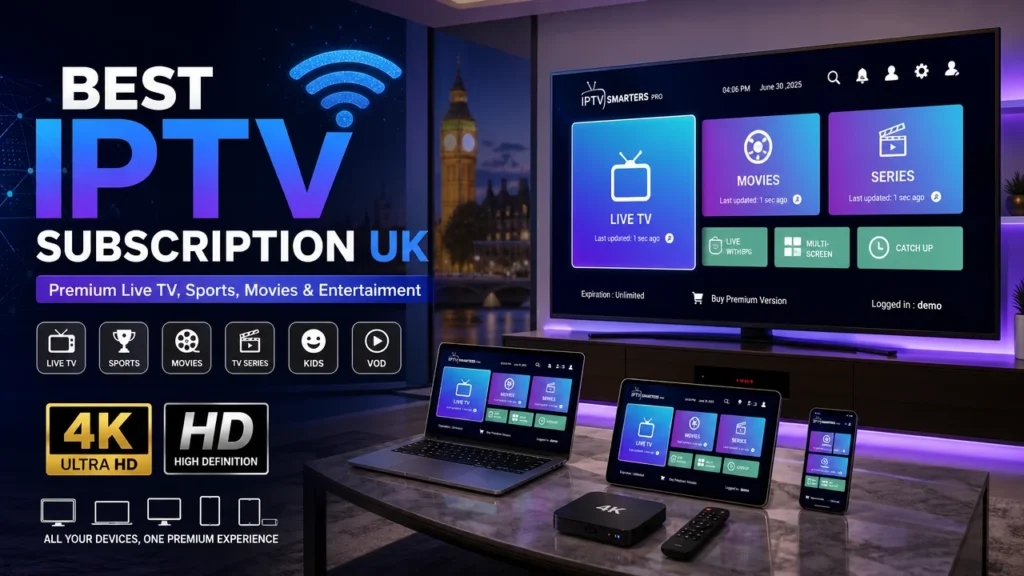
The image below shows a typical setup guide shared by experienced users when setting up their ip-tv provider subscription on an Android device.
Concrete Benefits of Using a Reliable IP-TV Provider
Why do millions of households switch every year? Here are the tangible advantages:
- Cost savings: A typical subscription costs between $10 and $30 per month — dramatically lower than traditional cable or satellite packages that often exceed $100.
- Channel variety: You can access 10,000+ live channels from multiple countries including the UK, India, Latin America, and the Middle East — all in one subscription.
- Multi-device support: Watch on your smart TV, smartphone, tablet, laptop, or Firestick simultaneously if your plan allows multiple connections.
- VOD libraries: Most providers include extensive on-demand content — movies, series, and documentaries updated regularly.
- No long-term contracts: Most subscriptions are month-to-month, giving you flexibility to cancel or pause without penalties.
- Catch-up & recording (nPVR): Many providers offer features like catch-up (rewind shows up to 7 days) or cloud recording.
Honest Limitations You Need to Know
No service is perfect. Being aware of these limitations helps you set realistic expectations before committing to any ip-tv provider:
- Dependence on internet speed: If your connection drops below 25 Mbps for 4K content, buffering will ruin the experience. A wired Ethernet connection is always preferred over Wi-Fi for reliability.
- Service instability: Some providers oversell server capacity, leading to buffering during prime-time events like football finals or boxing matches.
- Legal grey area: Many ip-tv providers operate without proper licensing from content owners. Using such services can expose you to legal liability depending on your country of residence.
- Difficult customer support: The industry often uses WhatsApp-based support or ticket systems with slow response times.
- Device compatibility issues: Not all providers support every device model. Some apps crash frequently on older Firestick generations or certain smart TV brands.
- Channel downtime: Channels may go offline unexpectedly for maintenance or takedowns, with limited alternatives provided.
Unlock complete high-definition information and priority access packs.
Claim This Special Offer for ip-tv provider →IP-TV Provider vs. Alternatives — Honest Comparison
To help decide whether this is the right route for you, here is a direct comparison with the most common alternatives users consider:
| Feature | IP-TV Provider | Cable TV | Streaming Services (Netflix/Hulu) | Free IPTV (Legality Risks) |
|---|---|---|---|---|
| Monthly cost | $10 – $30 | $80 – $150+ | $10 – $20 (each service) | $0 (but high risk) |
| Live channels | 10,000+ | 100 – 300 | 0 (mostly VOD) | 5,000+ (unstable) |
| 4K support | Often available | Limited/Expensive | Yes (selected content) | Rarely available |
| Contract required | No | Usually 12-24 months | No | No |
| Internet dependence | Essential (25 Mbps+) | Not required | Essential (15 Mbps+) | Essential (unreliable) |
| Legal clarity | Mixed — check your country | 100% legal | 100% legal | Generally illegal |
| Customer support | Variable (often slow) | Professional (24/7 phone) | Good (live chat/email) | None |
Who Is an IP-TV Provider For? — User Profiles
A service like this is not for everyone. Here are the most common user types who benefit — and those who should stick with cable or mainstream streaming:
How to Get Started — Practical Steps
Ready to try an ip-tv provider? Follow these numbered steps to minimize risk and maximize satisfaction:
- Assess your internet speed: Run a speed test at speedtest.net. You need at least 25 Mbps for stable HD streaming and 50 Mbps for 4K. Always test with a wired connection if possible.
- Research candidate providers: Read independent reviews on Reddit, Trustpilot, or IPTV-specific forums. Look for consistent mentions of "no buffering," "good EPG," and "responsive support." Avoid providers with no trial option.
- Choose a device: Most reliable setups use a Firestick 4K Max, NVIDIA Shield Pro, or an Android TV box. Smart TV apps (WebOS, Tizen) can work but are often slower to update.
- Install a player app: Download TiviMate, IPTV Smarters Pro, or XCIPTV Player from the Play Store or Amazon Appstore. These are free and widely trusted.
- Take a free trial: A legitimate provider will offer a 24-hour or 48-hour free trial. Use it to test streaming during peak evening hours when server load is highest.
- Set up your EPG: Once subscribed, paste the M3U playlist URL and EPG URL into your player app. Adjust the time offset if the guide shows wrong times.
- Start with a monthly plan: Never commit to a 12-month plan upfront. Pay month-to-month until you are convinced of the service quality.
- Monitor performance for one week: Take note of buffering during prime-time (8-11 PM local). If it is frequent, switch to another provider.
FAQ — 8 Long-Tail Questions Answered
1. How to choose an ip-tv provider that has no buffering?
Look for providers that mention dedicated streaming servers, CDN integration, and offer free trials. Use the trial to test during peak hours (8-10 PM local time). Also check Reddit reviews under subreddits like r/IPTV for recent feedback. A provider with high server capacity will have minimal buffering even during popular live sporting events.
2. Best ip-tv provider 2026 for sports?
The best sports-focused providers offer dedicated 4K sports channels, multi-angle viewing for matches, and catch-up for full replays. Look for providers that specifically advertise coverage of your preferred leagues (NFL, Premier League, UFC, NBA). A strong EPG with proper sports scheduling is also a key indicator of a quality sports-oriented service.
3. Cheapest ip-tv subscription that still delivers quality HD?
You can find decent basic subscriptions starting at around $8-$12 per month for a single connection with SD/HD channels. Beware of anything under $5 — those are often oversold server capacity or resellers who vanish quickly. The sweet spot for quality with affordable pricing is typically $12-$20 per month for multi-connection plans.
4. Ip-tv provider reviews reddit — what should I look for?
When scanning Reddit reviews, look for patterns: multiple users mentioning the same provider without obvious shill accounts (brand-new profiles). Pay attention to comments about EPG accuracy, how recently channels were updated, and actual customer support response times. Beware of posts that are too glowing — genuine feedback usually includes some minor complaints.
5. Where to buy iptv legally — are there authorized services?
Yes, legitimate IPTV services require proper licensing agreements. Examples include Sling TV, YouTube TV, Hulu + Live TV, and FuboTV in the US, or Sky Go and BT Sport in the UK. These are fully legal but cost more ($40-$80/month). Completely free IPTV streams are almost always unauthorized and carry legal risk for the end-user.
6. Reliable ip-tv provider no buffering — does it actually exist?
A "no buffering" provider is rare because buffering depends on your internet connection too. However, you can minimize it by choosing a provider that uses multiple CDNs, offers a dedicated server option, and has an active Discord or Telegram community. Test with a trial first. Even the best provider can buffer if your home network is congested or your ISP throttles streaming traffic.
7. Iptv service vs cable tv — which is actually cheaper in 2026?
An IPTV subscription costs $10-$30 per month compared to $80-$150 for cable. However, you need a fast internet connection ($50-$70/month) and a streaming device (one-time $30-$200). If you already have internet and a smart TV/Firestick, IPTV saves you 50-80% monthly. Without internet, cable may actually cost the same once you factor in required connectivity.
8. How to use ip-tv provider for live NFL games in 4K?
First, confirm the provider specifically lists "NFL Sunday Ticket" or "RedZone 4K" in their channel lineup. Use a 4K-capable device like the Firestick 4K Max or NVIDIA Shield Pro. Ensure your internet speed is at least 50 Mbps. During the game, use a wired Ethernet connection to avoid Wi-Fi interference. Many providers have a dedicated 4K category in their EPG for easy access.
LIMITED TIME AVAILABILITY
Unlock Full ip-tv provider Access
Secure special promotional rates instantly before the window closes. Lock in your pricing model today before plans return to standard regional metrics.
Final Verdict — Should You Subscribe to an IP-TV Provider?
An ip-tv provider is a powerful alternative for anyone wanting to cut cable costs without sacrificing channel variety. It offers incredible value for sports fans, expatriates, and budget-conscious viewers who are comfortable with a bit of technical setup. The key is to choose a provider that prioritizes server capacity, provides a proper EPG, and offers a free trial so you can test before committing.
If you value absolute legal certainty, seamless simplicity, or have slow internet — a traditional cable package or legal streaming service like YouTube TV will serve you better. But for the majority of cord-cutters who do their homework, a reliable ip-tv provider delivers an unbeatable combination of price, content volume, and flexibility.
Our team has reviewed dozens of providers. The one that consistently ranks high for stability, multi-device support, and competitive pricing is the